
 EN
EN



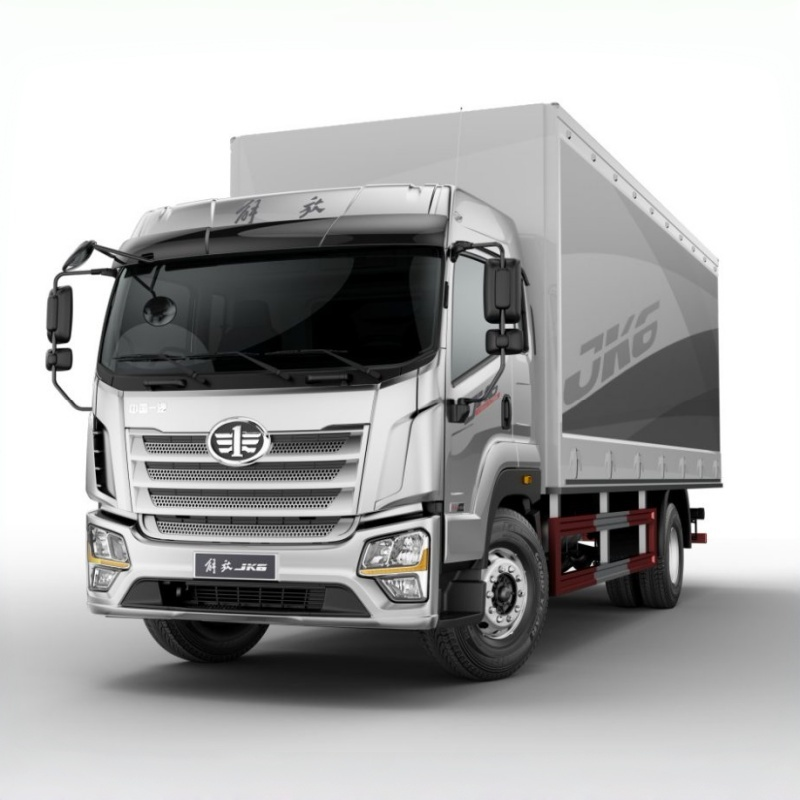
Cargo Truck Classifications: GVWR, Regulatory Requirements, and Real-World Use Cases
Understanding Classes 1–9 by GVWR and how classification affects licensing, insurance, and compliance
Every cargo truck in the U.S. is assigned a class based on its Gross Vehicle Weight Rating (GVWR)—the maximum allowable weight of the vehicle plus cargo, passengers, fuel, and equipment. The Federal Highway Administration (FHWA) divides commercial trucks into eight classes, grouped into three categories: light-duty (Classes 1–3), medium-duty (Classes 4–6), and heavy-duty (Classes 7–8). The following table summarizes the GVWR ranges and key regulatory implications:
| Class | GVWR (lbs) | Category | Licensing & Compliance Highlights |
|---|---|---|---|
| 1 | 0–6,000 | Light-duty | Standard driver’s license; minimal DOT oversight |
| 2 | 6,001–10,000 | Light-duty | May require medical card if used commercially |
| 3 | 10,001–14,000 | Light-duty | Some states require annual inspection; no CDL |
| 4 | 14,001–16,000 | Medium-duty | Typically non-CDL; higher insurance premiums |
| 5 | 16,001–19,500 | Medium-duty | Often requires DOT medical certificate |
| 6 | 19,501–26,000 | Medium-duty | Class B CDL may be needed depending on cargo type |
| 7 | 26,001–33,000 | Heavy-duty | Class B CDL required; full DOT compliance (HOS, inspections) |
| 8 | 33,001+ | Heavy-duty | Class A CDL; strictest emissions, safety, and insurance rules |
Classification directly affects operating costs. Insurance rates climb sharply above Class 6, and heavy-duty operators must comply with federal hours-of-service (HOS) rules and roadside inspection programs. Choosing the wrong class can lead to fines, delays, or voided coverage—so matching GVWR to actual loads is critical.
Matching light, medium, and heavy cargo truck classes to your business operations (e.g., last-mile delivery vs. regional freight)
Your choice of cargo truck class should align with the type of freight you move and the routes you run. Light-duty trucks (Classes 1–3) excel in last-mile delivery and urban routes where cargo is small, stops are frequent, and a CDL is not required. For example, a Class 2 cargo van is ideal for delivering parcels or food within a city.
Medium-duty trucks (Classes 4–6) strike the optimal balance for regional freight: they offer higher payload capacity without the licensing complexity or cost burden of Class 7–8 vehicles. A Class 6 box truck handles local distribution or wholesale deliveries efficiently while keeping insurance and maintenance costs manageable.
Heavy-duty trucks (Classes 7–8) are engineered for long-haul, high-volume freight. Though they demand a CDL and carry higher fuel and maintenance expenses, they deliver the lowest cost per pound for interstate shipping. If your typical loads rarely exceed 26,000 lbs GVWR, stepping up to a Class 7 or 8 adds unnecessary cost, regulatory overhead, and operational inflexibility. Evaluate route length, cargo density, and driver qualifications before finalizing your class selection.
Payload Capacity and Operational Fit: Avoiding Under- or Over-Specification
Calculating true payload needs—including cargo weight, equipment, driver, and fuel variability
Accurately determining payload requires more than estimating cargo weight alone. Start by subtracting your cargo truck’s curb weight from its GVWR to establish baseline capacity. Then account for all operational variables:
- Cargo weight: Include packaging, pallets, and securing materials (typically adding 10–15% extra)
- Equipment: Tools, lifts, or loading devices permanently onboard
- Driver/passengers: Allow 80–100 kg per occupant including personal gear
- Fuel variability: Full tanks add 200–500 kg; weight decreases as fuel burns
Factor in real-world fluctuations like seasonal cargo density shifts or temporary equipment. Maintain a 5–10% buffer for unexpected variations—tracking actual loads across multiple routes refines calculations. Overlooking any element risks dangerous overloading or inefficient oversizing.
How mismatched payload capacity impacts uptime, driver retention, route flexibility, and regulatory risk
Ill-fitting payload capacity triggers operational and financial repercussions. Under-specification forces trucks beyond design limits, accelerating wear on brakes and transmissions by 25–40%. This increases breakdown frequency, cuts uptime, and inflates maintenance costs. Drivers face heightened safety risks and frustration from recurring roadside issues—key contributors to turnover.
Over-specification carries different penalties:
- Route restrictions: Heavier trucks face bridge weight limits and urban access barriers
- Fuel waste: Up to 18% excess consumption from hauling unused capacity
- Regulatory exposure: Overloading fines up to $20,000 per incident (FMCSA 2023)
Balanced payload optimization preserves route flexibility, reduces driver stress, and avoids compliance violations—directly impacting profitability and retention.
Cargo-Specific Body Types and Configurations for Optimal Efficiency
Box trucks, cargo vans, flatbeds, and refrigerated units: selecting the right body type for your cargo truck application
Choosing the appropriate body configuration directly impacts payload efficiency and operational costs. Box trucks provide enclosed security for general freight but limit access to dock-height facilities. Cargo vans offer maneuverability for urban deliveries yet sacrifice cubic capacity. Flatbeds enable oversized equipment transport while requiring advanced securement protocols. Refrigerated units maintain temperature-sensitive integrity at the expense of payload weight. Matching body type to cargo characteristics prevents damage and reduces handling time—perishables demand refrigeration, while construction materials thrive on open platforms. A 2023 logistics study showed optimized body selection reduces loading time by 37% and damage claims by 29%. Evaluate cargo dimensions, environmental requirements, and loading frequency before specifying your cargo truck configuration.
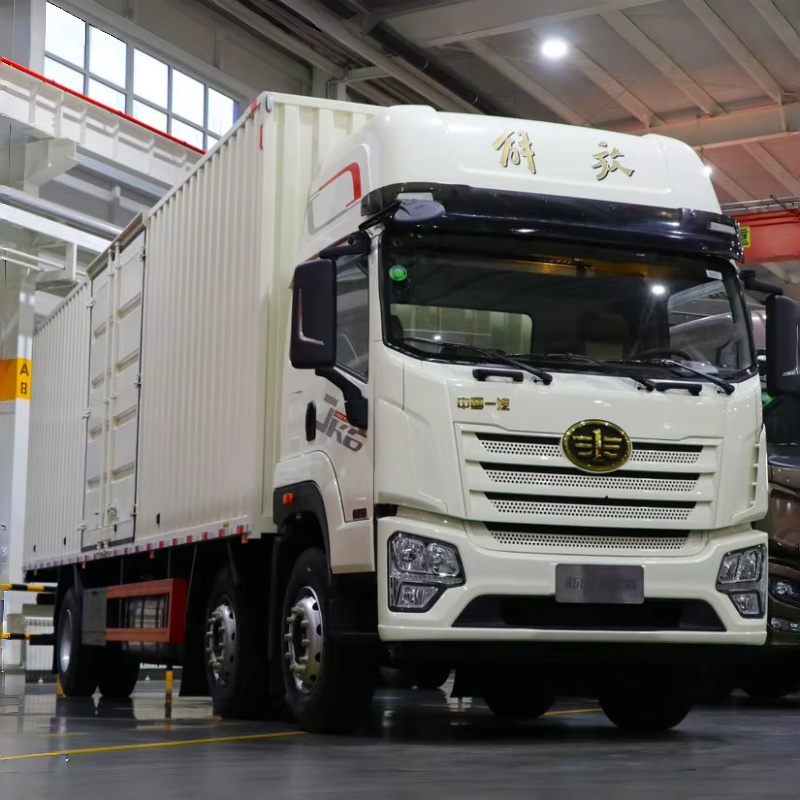
Total Cost of Ownership: Evaluating Long-Term Value Across Cargo Truck Classes
When evaluating the total cost of ownership (TCO) of any cargo truck, the purchase price is only the starting point. Fuel economy, maintenance frequency, parts availability, and driver comfort vary significantly across light, medium, and heavy classes—directly shaping long-term expenses.
Fuel economy, maintenance frequency, parts availability, and driver comfort by class—and their TCO implications
Light-duty cargo trucks (Class 1–2) typically achieve 15–20 mpg, require less frequent service intervals, and benefit from widely available, low-cost parts. Medium-duty trucks (Class 3–6) average 8–12 mpg, demand more specialized maintenance, and have higher per-service costs due to heavier components. Heavy-duty trucks (Class 7–8) yield 5–7 mpg, need frequent brake and transmission overhauls, and parts often require longer lead times—yet they offer superior driver comfort with air-ride cabs and advanced ergonomics, which can improve retention. A simplified comparison shows the trade-offs:
| Class | Fuel Economy (mpg) | Maintenance Cost per Mile | Parts Availability | Driver Comfort |
|---|---|---|---|---|
| Light | 15–20 | $0.05–$0.08 | High | Basic |
| Medium | 8–12 | $0.10–$0.14 | Moderate | Moderate |
| Heavy | 5–7 | $0.18–$0.25 | Low–Moderate | High |
The lower fuel efficiency and higher maintenance burden of heavier classes must be offset by revenue from larger loads; otherwise, TCO rapidly erodes margin.
When higher-class cargo trucks increase cost without ROI: identifying over-specification pitfalls
Over-specifying a cargo truck—choosing a heavy-duty model for light loads—drives unnecessary fuel consumption, inflated registration fees, and idle capacity. For example, a Class 8 truck carrying partial loads often sees its per-mile fuel cost spike while underutilizing its payload and towing capabilities. Fleet managers should calculate the average daily payload and route distance before selecting a class. If the maximum payload never exceeds 10,000 pounds, a medium-duty unit will deliver lower TCO with no sacrifice in operational fit.
Table of Contents
- Cargo Truck Classifications: GVWR, Regulatory Requirements, and Real-World Use Cases
- Payload Capacity and Operational Fit: Avoiding Under- or Over-Specification
- Cargo-Specific Body Types and Configurations for Optimal Efficiency
- Total Cost of Ownership: Evaluating Long-Term Value Across Cargo Truck Classes

