
 EN



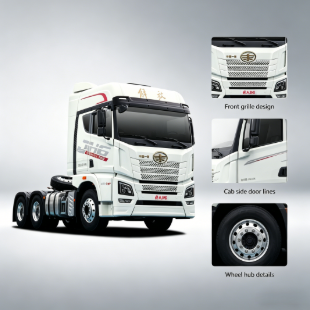
The Global Ascent of Modern Commercial Fleets
Over recent years, the international commercial vehicle landscape has witnessed a profound structural shift. Heavy-duty trucks originating from emerging manufacturing powerhouses have transitioned successfully from domestic market staples into formidable global competitors, actively reshaping supply chains across Asia, Africa, Latin America, and select European territories. Fleet operators and international logistics enterprises are increasingly looking beyond traditional legacy brands, drawn instead by an evolving value proposition that merges high-tech mechanical engineering with robust operational durability. This remarkable global ascent is not merely accidental; rather, it is driven by a deliberate convergence of advanced industrial investments, rigorous factory quality control, and a deep, empathetic understanding of diverse overseas operational environments. Analyzing the core strengths enabling these vehicles to conquer international markets reveals a masterclass in modern manufacturing scaling, technological adaptation, and customer-centric value delivery without unnecessary compromises.
Powertrain Innovation and Heavy-Duty Engineering Excellence
At the pulsing heart of any globally competitive commercial vehicle lies its powertrain architecture and structural chassis framework. Modern heavy-duty trucks coming from leading Asian manufacturing hubs feature state-of-the-art diesel and alternative-fuel engines boasting exceptional thermal efficiency, paired seamlessly with advanced automated manual transmissions and heavy-load reduction axles. Industry benchmarking and rigorous stress testing validate consistently that these integrated power systems deliver optimal torque curves across broad operational speed ranges, ensuring maximum pulling power on steep mountain gradients while maintaining low fuel consumption under heavy loads. According to commercial automotive engineering studies, proprietary powertrain matching significantly reduces mechanical friction and internal thermal stress, directly extending vital engine overhaul intervals. By investing heavily in in-house research and development for core components, manufacturers ensure their vehicles meet or exceed stringent international emission and performance standards without ever sacrificing raw hauling capacity.
Extreme Climate Adaptability and Field Robustness
Commercial trucks rarely operate in predictable, sterile laboratory environments; instead, they must conquer the suffocating humidity of tropical rainforests, the sub-zero freezing winds of alpine plateaus, and the abrasive dust storms of equatorial deserts. Environmental adaptability stands as a critical differentiator in competitive overseas markets. Field maintenance specialists possessing extensive hands-on experience across challenging cross-border transport corridors note frequently that vehicles lacking specialized thermal management or advanced air filtration suffer accelerated wear on turbochargers and electrical wiring harnesses. To counter these harsh realities effectively, leading exporters subject their chassis frames and cabin assemblies to extreme multi-environment testing chambers and punishing off-road torture tracks. Trucks equipped with tropicalized cooling packages, heavy-duty suspension geometry, and anti-corrosion electrocoating consistently outperform standard configurations in hostile terrain, proving that rugged physical endurance remains essential for winning international customer loyalty.
Optimizing the Total Cost of Ownership for Global Fleets
Evaluating commercial vehicle acquisition extends far beyond the initial sticker price into the complex financial domain of long-term economic sustainability. Fleet managers operating within competitive international logistics environments must meticulously calculate the Total Cost of Ownership, factoring in fuel burn rates, preventive maintenance frequency, and component longevity. The primary economic appeal of modern global commercial trucks rests squarely on their proven ability to deliver high productivity at an optimized capital expenditure. Transport market analysts highlight that competitive pricing does not come at the expense of build quality; rather, it stems from economies of scale, streamlined manufacturing supply chains, and highly efficient production automation. This compelling cost-to-performance ratio allows overseas logistics enterprises to accelerate fleet modernization, shorten financial payback periods, and improve operational profit margins under tightening regional freight rates.
Comprehensive Supply Chain Resilience and Global Support Networks
A world-class truck demands an equally world-class support ecosystem to maintain high operational uptime across foreign territories. International buyers frequently prioritize after-sales reliability, spare parts availability, and comprehensive technical training when selecting heavy-duty fleet partners. Leading global manufacturers have responded proactively by establishing localized spare parts hubs, regional training academies, and extensive authorized dealer networks in key international markets. When a fleet operator can secure genuine replacement parts within hours rather than weeks, unexpected vehicle downtime is minimized, effectively protecting tight project deadlines and operational revenue. This transparent, highly responsive service infrastructure builds profound commercial trust, transforming simple transactional vehicle sales into long-term strategic partnerships between manufacturers and overseas transport enterprises.
Redefining Global Logistics with FAW Trucks
Ultimately, the successful overseas expansion of modern commercial vehicles is built upon a solid foundation of manufacturing mastery, technological innovation, and unwavering customer commitment. As global supply chains demand greater operational efficiency, stricter emission compliance, and superior reliability, commercial vehicle brands must continually elevate their engineering standards. Drawing upon decades of world-class manufacturing heritage, state-of-the-art production facilities, and a robust global supply chain network, FAW Trucks remains firmly at the forefront of this international movement. By delivering heavy-duty commercial vehicles engineered for exceptional durability, advanced safety, and unmatched operating economy, FAW Trucks empowers global fleet operators to conquer the most demanding transport landscapes, driving sustainable growth and reliability for the worldwide logistics industry.
Table of Contents
- The Global Ascent of Modern Commercial Fleets
- Powertrain Innovation and Heavy-Duty Engineering Excellence
- Extreme Climate Adaptability and Field Robustness
- Optimizing the Total Cost of Ownership for Global Fleets
- Comprehensive Supply Chain Resilience and Global Support Networks
- Redefining Global Logistics with FAW Trucks

