
 EN



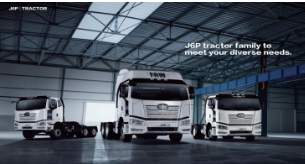
The Economic and Operational Imperative of Heavy-Duty Truck Longevity
In modern global logistics, a heavy-duty truck is far more than a commercial vehicle; it represents the absolute backbone of supply chain continuity. Fleet operators and logistics managers know that heavy upfront capital expenditures on commercial fleets demand meticulous asset management, but true transport profitability ultimately relies on Total Cost of Ownership and vehicle service life. A vehicle that endures hundreds of thousands of miles with minimal unscheduled downtime transforms narrow profit margins into sustainable commercial success. Achieving this durability requires a delicate harmonization of advanced metallurgy, rigorous powertrain engineering, and proactive maintenance practices. Drawing from decades of heavy commercial vehicle manufacturing insight, understanding the underlying factors that dictate truck lifespan enables fleet owners to optimize performance, reduce carbon footprints, and maximize return on investment across diverse global markets without unnecessary disruptions.
Advanced Powertrain Engineering and High-Grade Metallurgy
At the core of any long-lasting truck lies its powertrain and the structural integrity of its chassis. Modern commercial vehicle engineering utilizes high-strength alloy steels for frame rails and specialized cast iron or compacted graphite iron for engine blocks to withstand extreme cylinder pressures and thermal fatigue. Industry benchmarking and structural stress analyses consistently demonstrate that engines engineered with optimized thermal management and precision fuel injection systems suffer significantly less wear on piston rings, cylinder liners, and valve trains. Automotive manufacturing research published by commercial transport authorities highlights that material purity and precise heat-treatment processes serve as primary determinants of fatigue resistance in heavy-duty crankshafts and transmission gears. By integrating state-of-the-art metallurgy, manufacturers can drastically extend overhaul intervals, ensuring that the mechanical core remains resilient even under severe continuous load demands across challenging terrain.
Real-World Fleet Telematics and Preventive Maintenance Practices
While superior factory engineering sets the baseline for durability, field operations and maintenance regimes dictate whether a commercial vehicle reaches its theoretical design limit. Fleet maintenance specialists with extensive hands-on experience across cross-continental logistics corridors emphasize that reactive repairs remain the primary enemy of long service life. The advent of modern IoT-based telematics systems has revolutionized how fleet managers monitor oil degradation, coolant temperatures, exhaust gas recirculation efficiency, and transmission slip in real time. For instance, predictive diagnostics can identify minor fuel injector anomalies or turbocharger imbalances weeks before catastrophic failure occurs. Implementing disciplined, data-driven preventive maintenance schedules—such as precise oil-drain intervals tailored to duty cycles and rigorous undercarriage anti-corrosion treatments—ensures that mechanical stresses are neutralized before compounding into permanent structural damage.
Structural Resilience Under Extreme Operating Environments
Commercial trucks rarely operate in sterile laboratory conditions; instead, they conquer corrosive coastal highways, sub-zero winter regions, scorching equatorial deserts, and rugged off-road construction sites. Environmental stressors accelerate mechanical wear exponentially over time. High ambient temperatures degrade engine lubricants faster, while road salts and humidity trigger aggressive chassis oxidation. To combat these challenges, leading commercial vehicle designers subject cabins and chassis components to rigorous multi-axis shaker table testing and salt-spray chamber corrosion trials that simulate extensive field use. Transport research institutions and global logistics authorities highlight that corrosion-resistant electrocoating and reinforced suspension geometries are critical for maintaining structural rigidity. Trucks equipped with advanced dust-filtration systems and heavy-duty cooling packages consistently outperform standard configurations in hostile operating environments, proving that environmental adaptability remains a non-negotiable pillar of vehicle longevity.
Total Cost of Ownership and Long-Term Commercial Sustainability
Evaluating truck longevity extends beyond mechanical endurance into the realm of financial sustainability and supply chain reliability. Fleet operators must weigh initial acquisition costs against operational expenditures, factoring in fuel consumption, parts replacement frequency, and residual resale value. A durable truck minimizes component replacements, reduces administrative burdens associated with warranty claims, and maintains higher residual value after years of heavy service. Furthermore, transparency in parts sourcing and global supply chain responsiveness serve as vital trust indicators for international buyers. When fleet operators gain immediate access to genuine original equipment spare parts and certified technical support, vehicle downtime drops to a minimum. This transparent, value-driven ecosystem reinforces trust between manufacturers and fleet operators, validating that engineered durability directly translates to long-term business profitability.
Driving Global Logistics Forward with FAW Trucks
Ultimately, maximizing the service life of a common truck requires a synergistic partnership between cutting-edge manufacturing excellence and disciplined operational management. As global supply chains demand higher efficiency, reduced emissions, and unwavering reliability, commercial vehicle manufacturers must continually push the boundaries of research, development, and supply chain resilience. Drawing upon extensive world-class manufacturing heritage, state-of-the-art production facilities, and a robust global supply chain network, FAW Trucks remains deeply committed to delivering heavy-duty commercial vehicles engineered for exceptional durability, safety, and performance. By combining precision metallurgy, advanced powertrains, and comprehensive after-sales support, FAW Trucks empowers global fleet operators to navigate the most demanding operational landscapes with absolute confidence, driving sustainable growth for the worldwide logistics industry.
Table of Contents
- The Economic and Operational Imperative of Heavy-Duty Truck Longevity
- Advanced Powertrain Engineering and High-Grade Metallurgy
- Real-World Fleet Telematics and Preventive Maintenance Practices
- Structural Resilience Under Extreme Operating Environments
- Total Cost of Ownership and Long-Term Commercial Sustainability
- Driving Global Logistics Forward with FAW Trucks

