
 EN
EN



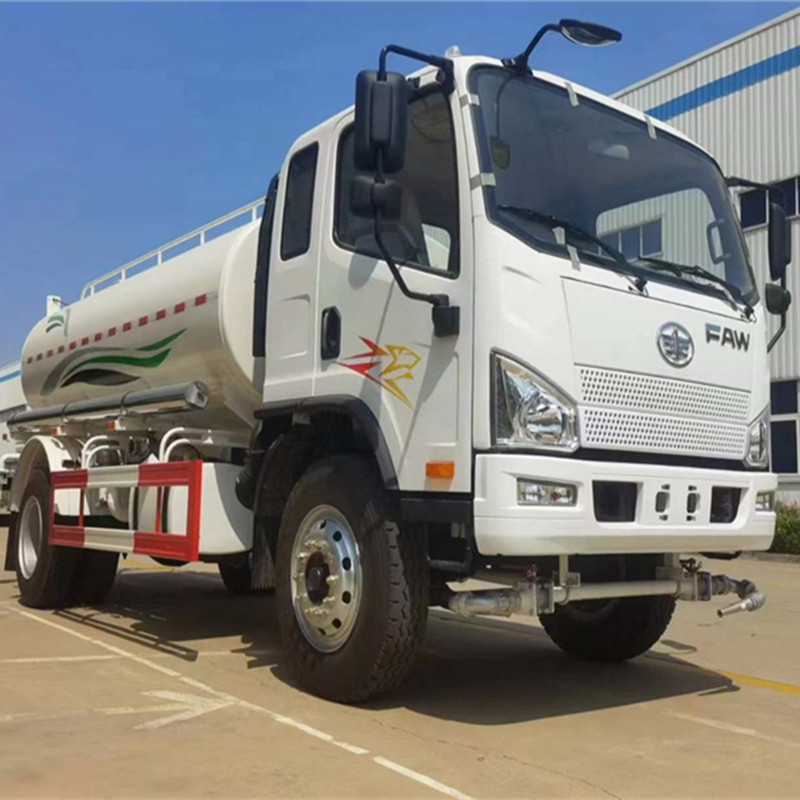
What Load Bearing Standards Must Professional Transport Trucks Meet?
In the demanding world of heavy-duty logistics, the efficiency and safety of global transport are dictated entirely by a vehicle’s ability to handle massive physical stress without yielding. A professional transport truck is not merely a mode of transport; it is a complex, mobile platform engineered to maintain structural integrity under extreme weight and relentless operational cycles. The fundamental measure of this capability is defined by rigorous load bearing standards. These engineering benchmarks ensure that the chassis, suspension, and axle assemblies can endure the punishing demands of long-haul logistics without compromising vehicle stability or the safety of the operator. Understanding these standards is essential for fleet managers who prioritize both operational longevity and the security of high-value cargo.
The Foundation of Chassis Structural Integrity
At the heart of any truck's load-carrying capacity is the chassis frame. Professional transport trucks are constructed using high-tensile steel alloys, specifically formulated to withstand the intense bending moments and torsional forces encountered during transit. The load bearing standards for these frames are derived from complex finite element analysis, which predicts how a frame will deform under dynamic weight conditions. A reliable chassis must carefully balance absolute rigidity with a necessary degree of controlled elasticity. If a frame is built too rigid, it becomes prone to stress fractures caused by vibration; if it is too flexible, it will fail to support the payload's weight during turns. Professional trucks from global industry leaders are tested far beyond their stated capacity to ensure that even during uneven road conditions, the chassis remains perfectly aligned, maintaining the geometry required for safe driving.
Axle Geometry and Weight Distribution Dynamics
The distribution of weight across axle groups is perhaps the most critical factor in both legal compliance and mechanical performance. Professional transport trucks are subject to strict axle-weight limitations, which are determined by the load-bearing capacity of the wheels, tires, and suspension systems connected to each axle. Professional-grade trucks utilize advanced multi-leaf or air-ride suspension systems designed to distribute gravitational force evenly across the contact patches. By strictly adhering to international load bearing standards for axle grouping, engineers can prevent premature tire degradation, bearing failure, and brake system fatigue. This precise distribution allows the vehicle to navigate steep gradients and sharp curves with a predictable center of gravity, effectively preventing the "load shift" hazards that threaten high-center-of-gravity vehicles in emergency braking scenarios.
Suspension Resilience and Energy Dissipation
A transport truck's suspension serves as the essential bridge between a heavy payload and an unpredictable road surface. Modern professional trucks utilize suspension systems that act as both a load-bearing component and a sophisticated shock-dissipating mechanism. When a fully loaded truck traverses a deep pothole or a highway speed bump, the impact energy is transferred directly to the suspension assembly. Meeting high-level load bearing standards requires that these systems possess enough damping capacity to convert this violent kinetic energy into thermal energy, which is then dissipated into the environment before it ever reaches the chassis frame. Without this critical capacity, the resulting structural fatigue would quickly lead to cracks in the mounting points, eventually compromising the vehicle’s ability to remain safe for operation on public roads.
Safety Factors and Overload Management
Reliability in the transport industry is defined by the "Safety Factor"—the calculated margin by which a vehicle exceeds its rated load capacity before permanent structural failure occurs. Professional manufacturers build in a strategic buffer zone that accounts for common variables like human error, extreme road irregularities, and sudden, high-speed emergency maneuvers. This engineering discipline ensures that a truck rated for a specific weight can safely operate even when briefly subjected to intense dynamic force spikes. These load bearing standards are not just about keeping the truck on the road; they are fundamentally about preventing catastrophic failure. A professional-grade truck ensures that the mechanical strain of a heavy haul is spread evenly across the entire vehicle architecture, rather than focusing localized stress on a single pivot point or critical weld.
Logistical Reliability Through FAW Trucks
The engineering philosophy behind a professional transport vehicle must be rooted in the harsh, unrelenting reality of global logistics. Reliability is the ultimate goal, and this is achieved through components that are tested for real-world stress, vibration, and thermal expansion. Whether operating in arctic cold or tropical heat, the transport solution must remain consistent and dependable. FAW Trucks understands that the structural demands of the transport industry require more than just raw power—they require a holistic approach to design where every bolt, beam, and bracket aligns with international load bearing standards. By providing vehicles that are engineered for high-cycle endurance and balanced load management, FAW Trucks ensures that international logistics providers can maintain their demanding schedules and safeguard their assets, confirming that the vehicle is built to sustain performance regardless of the terrain or the weight of the task at hand.

