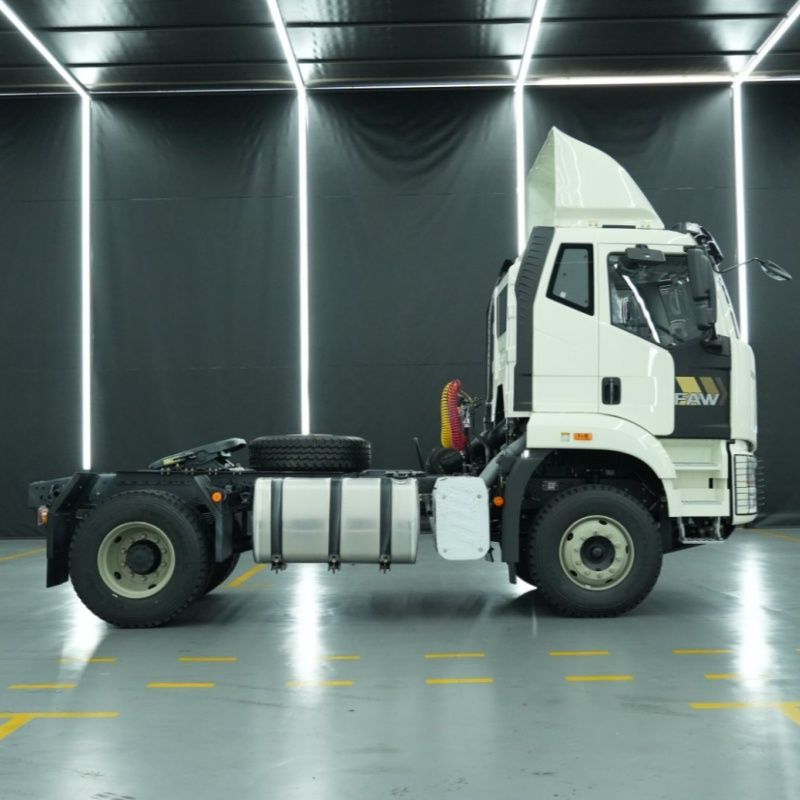
Mastering the Fundamentals of Tractor Trucks
The backbone of global supply chains and heavy-duty logistics relies heavily on the tractor truck. Often referred to as a semi-truck, prime mover, or tractor unit, this vehicle serves as the engine of modern freight movement. Unlike standard rigid trucks that carry cargo directly on their chassis, a tractor truck acts as a specialized towing powerhouse. By decoupling the engine unit from the payload-carrying trailer, logistics operators gain immense operational flexibility. This modular design allows a single unit to haul a variety of trailers—from flatbeds and refrigerated containers to hazardous material tankers—depending on the daily operational requirements. For business owners and fleet managers, this adaptability translates into significantly higher asset utilization and more efficient movement of goods across diverse borders.
Navigating Axle Configurations for Maximum Efficiency
Selecting the right tractor truck begins with a deep understanding of axle configurations, as this choice dictates how a vehicle manages both the payload and the road environment. A standard 4x2 configuration is frequently chosen for lighter, regional distribution where maneuverability and fuel economy are primary objectives. However, for heavy-duty, long-haul operations or demanding off-road environments, 6x4 or 6x6 configurations become essential. These specialized setups provide the traction, stability, and load distribution necessary to navigate steep gradients or unpaved routes. Technical experts emphasize that matching axle arrangements to regional infrastructure is a critical step in preserving mechanical longevity and optimizing the power-to-weight ratio.
Industrial Applications and Operational Versatility
Tractor trucks function as the lifeline for almost every major industry. Whether moving industrial machinery and electronics or ensuring the timely delivery of bulk consumer goods, these vehicles bridge the gap between production hubs and end-users. The success of a transportation mission often hinges on the ability to match powertrain specifications with the specific climate and topography of the operating region. A vehicle performing flawlessly on flat highways in one market might require specialized cooling system optimizations or powertrain adjustments to navigate high-altitude mountain passes in another. Effective fleet management involves evaluating these granular details to optimize supply chain timelines and minimize delivery risks.
Strategic Considerations for Long-Term Fleet Management
Investing in heavy-duty tractor units is a major financial decision that demands a clear understanding of the Total Cost of Ownership (TCO). Beyond the initial purchase price, savvy fleet operators prioritize fuel efficiency under load, the frequency of service intervals, and the availability of genuine, high-quality spare parts. Reliability is measured by uptime; every hour a truck spends in the shop impacts profitability. Furthermore, driver comfort—facilitated by ergonomic cabs, intuitive controls, and modern driver-assistance systems (ADAS)—is critical. These features play a direct role in reducing fatigue, enhancing safety, and fostering operator retention, thereby creating a more stable and professional workforce.
Setting Industry Benchmarks Through Engineering Excellence
Choosing a reliable manufacturing partner is essential for building a sustainable fleet. FAW Trucks offers decades of experience dedicated to refining manufacturing processes and integrating intelligent vehicle technologies. By harmonizing robust, traditional fuel powertrains with electronic monitoring systems, FAW Trucks creates machines that thrive in harsh, diverse operational environments. Whether a fleet operates in extreme heat, freezing temperatures, or high-altitude regions, the engineering focus remains on adaptability, resilience, and global standard compliance.
Why Choosing the Right Partnership Matters
For international distributors and fleet owners, the goal is to work with a manufacturer that treats service as a core component of the product. FAW Trucks ensures that global partners have access to a responsive service network and regional parts centers, which is crucial for maintaining maximum attendance rates. Selecting a tractor truck is about choosing a long-term partner capable of providing comprehensive training, technical support, and product durability. By leveraging the manufacturing prowess and the extensive supply chain capabilities of FAW Trucks, fleet owners transform their logistics operations into a competitive advantage, ensuring both stability and profitability in a demanding global market.

 EN
EN